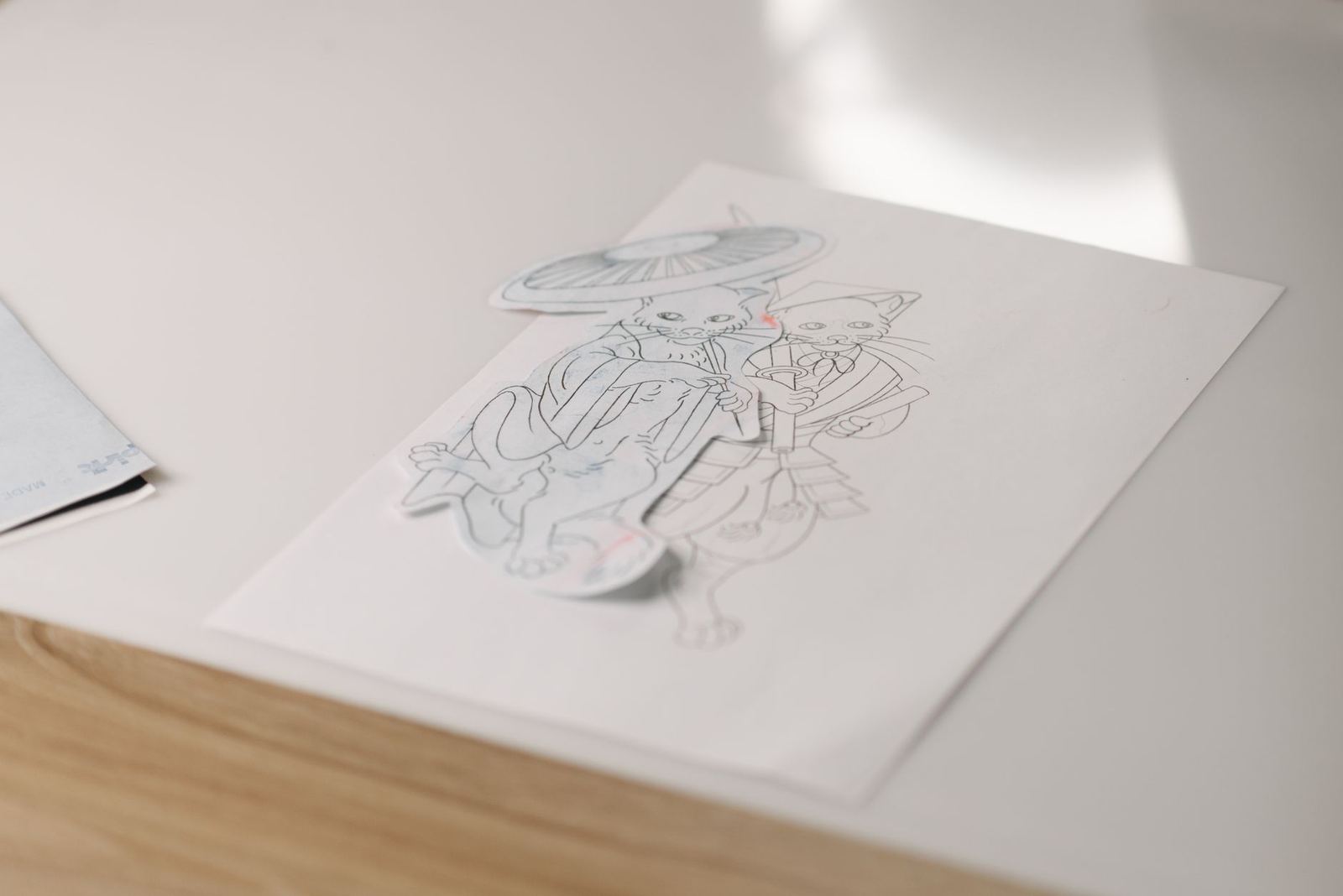
Wondering how cartoons ended up on your TV? Hanna-Barbera history begins when two former MGM animators founded their own studio and used limited animation to make cartoons cheap enough for television.
This guide sits inside our wider look at cartoon history, and it follows one studio’s move from cinema shorts to the small screen.
| Item | Value |
|---|---|
| Studio founded | July 7, 1957 |
| First series premiere (The Ruff and Reddy Show) | December 1957 |
| Length of that first series’ run | 156 episodes |
| Acquired by Taft Broadcasting | 1966 |
| Purchased by Turner Broadcasting System | 1991 |
| Absorbed into Warner Bros. Animation | 2001 |
These figures come from Wikipedia’s Hanna-Barbera entry and its page on The Ruff and Reddy Show. Dates and counts can change as sources are corrected, so check the sources before you rely on them.
From Tom and Jerry to a studio of their own
William Hanna and Joseph Barbera met in 1938 at MGM’s animation unit, and their first joint hit, Tom and Jerry, arrived in 1940. Seven of the films won seven Oscars for “Best Short Subject (Cartoons)” between 1943 and 1953, according to Wikipedia. The awards went to producer Fred Quimby, who was not directly involved in developing the shorts.
MGM decided in mid-1957 to close its cartoon studio, having built what it considered a reasonable backlog of shorts to re-release, as the same entry explains. Hanna and Barbera then put $30,000 of their own money into a new venture called H-B Enterprises, per the Ruff and Reddy page.
Their route to market ran through George Sidney, a former MGM colleague who took a minority stake in return for acting as their business representative. He arranged a meeting at Screen Gems, which had been considering a return to animation, according to the same page.
How limited animation made TV cartoons affordable
Television budgets were tiny next to cinema ones, so the pair rebuilt how a cartoon was drawn. Hanna recalled that MGM’s budget allowed as many as sixteen drawings per foot of film, while the new show had to manage with one or two per foot, as the Ruff and Reddy page quotes him.
He estimated that a six-minute cartoon would cost $17,500 with the technique, down from the $35,000 budget at MGM. By the time they pitched Screen Gems, he had worked the figure down to $3,000, per the same source.
Screen Gems liked the concept but warned that television was still an experimental medium. It gave the partners an option on five five-minute segments, with an escalating budget starting from $2,700, according to that page.
The Encyclopedia of Science Fiction lists the main tricks of the studio’s style:
- Simple character designs
- Limited expressions
- Looped movements
- Repeating backgrounds
- Close-ups showing only one talking head
The approach also changed the comedy. With less movement on screen, humour leaned on conversation, which the same entry sums up as tell, don’t show. The Ruff and Reddy page adds that the show was a pioneer of limited animation for television and paved the way for the studio’s future productions, according to its text.
Which shows defined the early Hanna-Barbera years?
The Ruff and Reddy Show premiered in December 1957 and ran for 156 episodes until April 1960, per Wikipedia. It has been called the earliest original color Saturday-morning cartoon, following Mighty Mouse Playhouse, which was made up of theatrical shorts.
The next series was a step up in quality, in the Encyclopedia of Science Fiction‘s view. The Huckleberry Hound Show ran from 1958 to 1961 for 68 episodes, with three segments per episode, and Yogi Bear’s popularity then earned him The Yogi Bear Show, which ran from 1961 to 1962 for 33 episodes.
The studio’s catalogue grew well beyond those two. Wikipedia lists Huckleberry Hound, all iterations of The Flintstones, Yogi Bear, Jonny Quest, Scooby-Doo, Super Friends and The Smurfs among its best-known series.
The same encyclopedia describes Scooby-Doo, Where Are You! (1969 to 1970, 25 episodes) as teenagers and their dog investigating supernatural phenomena that turn out to be faked by a criminal. It also counts about 140 series in all from the founding until 1991, not including specials and films.
Who owned Hanna-Barbera, and what happened to it?
The 1980s brought a decline, as the studio’s dominance faded while the Saturday-morning market weakened and weekday syndication grew in importance, per Wikipedia. The Encyclopedia of Science Fiction gives the ownership path in these steps:
- 1966: Taft Broadcasting bought the studio (source).
- 1991: Turner Broadcasting System bought it, and Barbera and Hanna moved from company heads to advisory positions (source).
- 1992: Cartoon Network began broadcasting, using the back catalogue (source).
- 1996: Turner’s company merged with Time Warner (source).
- 2001: The studio was absorbed into Warner Bros. Animation following Hanna’s death (source).
The name did not vanish entirely. In 2021, Cartoon Network Studios Europe changed its name to Hanna-Barbera Studios Europe as a tribute, per the same entry.
Where Hanna-Barbera sits in the wider animation story
The studio’s bargain was fewer drawings for more output, and that trade shaped what television cartoons looked like. For a comparison with another famous studio, our guide to looney tunes history is a useful companion.
Production methods kept evolving long after the hand-drawn era. You can follow that thread in our history of computer animation guide.
Frequently asked questions
Who founded Hanna-Barbera?
Show answer
Two MGM cartoon veterans, William Hanna and Joseph Barbera, set it up with producer George Sidney, who became a minority partner. The Wikipedia entry names all three as founders.
What is limited animation?
Show answer
It is a way of making a cartoon with far fewer drawings by choosing only the key poses that suggest movement. Hanna described it in his 1996 memoir, A Cast of Friends, as selecting only the key poses needed to convey the illusion of movement, according to the Ruff and Reddy page.
What was the first series made by the studio?
Show answer
That title belongs to Ruff and Reddy, a cat and dog duo created for NBC and presented by Screen Gems. Wikipedia describes it as the first series from H-B Enterprises, later known as Hanna-Barbera.
What happened to Hanna and Barbera?
Show answer
Hanna died in 2001, and the studio stopped operating independently after being folded into Warner Bros. Animation. The Encyclopedia of Science Fiction lists Barbera’s years as 1911 to 2006.