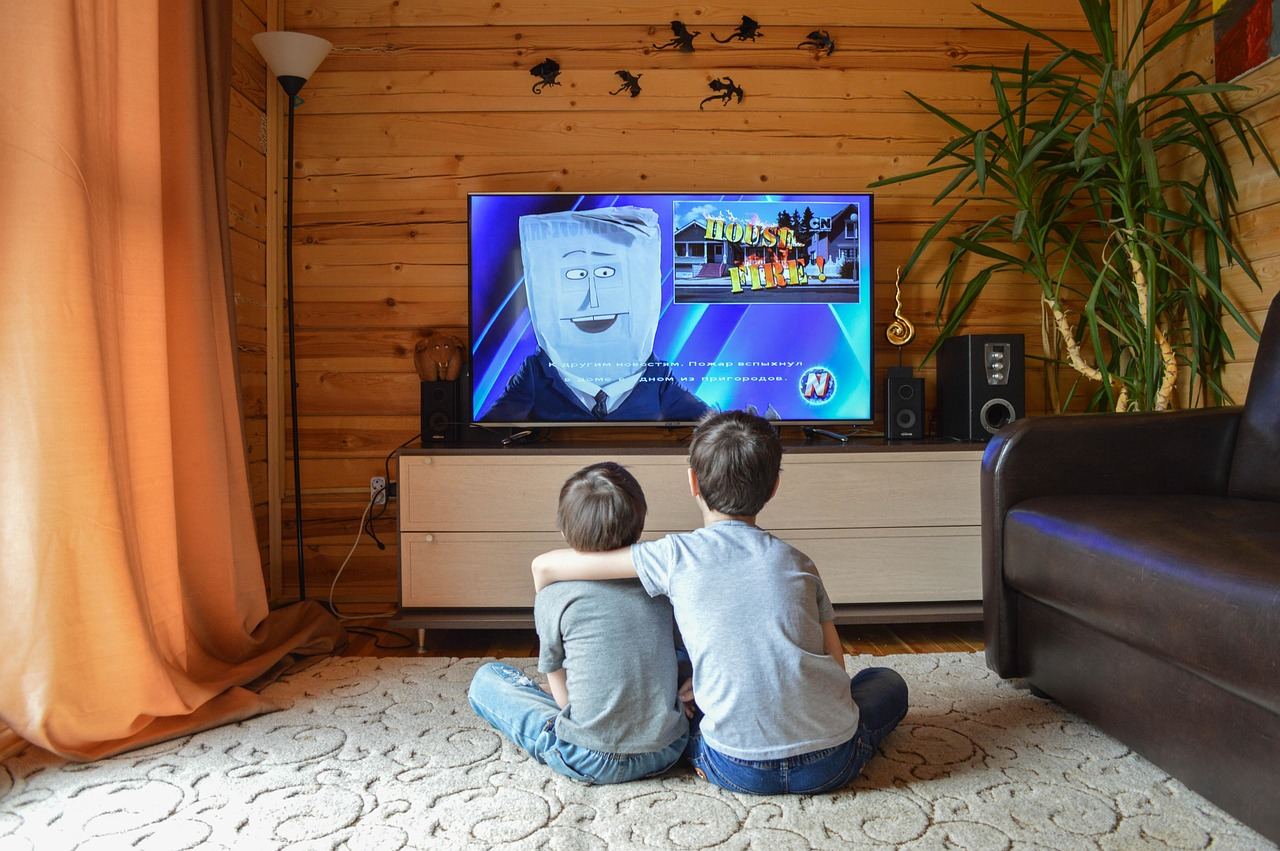
If you remember cereal and cartoons on weekend mornings, you’re recalling a real TV institution. Saturday morning cartoons history runs broadly from 1963 to 2016, driven by sponsor money, network rivalry and, eventually, federal rules.
This page is one piece of the wider story of cartoon history, and it shows how the Saturday block fits into animation as a whole.
| Item | Value |
|---|---|
| Broad span of the tradition | 1963 to 2016 |
| CBS’s first back-to-back cartoon block | two hours (1963-64 season) |
| CBS block under Fred Silverman | 4 and a half hours (1966-67 season) |
| Price per half-hour episode | $48,000 to $62,000 |
| Weekly E/I minimum for stations | three hours (rule effective 1997) |
These figures come from Wikipedia’s pages on the Saturday-morning cartoon and on children’s television regulation. They can change as pages are corrected, so check the sources before you rely on them.
How did cartoons take over Saturday mornings?
The groundwork came in the 1950s. After the Paramount Decree broke up block booking practices, animation production began moving from theatrical shorts to television, according to Wikipedia.
Until 1963, Saturday mornings on all three networks were a patchwork. They held older cartoons made for movie theaters, reruns of prime-time animation and live-action reruns such as My Friend Flicka and Sky King, per the same entry.
That changed with the 1963-64 season, when CBS set up a block of two hours of back-to-back animated series. Its lineup mixed acquired and returning shows, as Wikipedia lists them:
- Tennessee Tuxedo and His Tales (acquired after first-run syndication)
- The Quick Draw McGraw Show (acquired after first-run syndication)
- The Alvin Show (returning)
- Mighty Mouse Playhouse (returning)
Money followed quickly. The block drew major sponsorship from Kellogg’s and General Mills, and CBS responded by growing the schedule to three hours with Linus the Lionhearted and The Tom and Jerry Show, the same source says.
In the 1966-67 season, CBS daytime chief Fred Silverman rebuilt the block around 4 and a half hours of back-to-back cartoons. Wikipedia credits that move with putting CBS in first place in the ratings.

Superheroes, bidding wars and the business of cartoons
Silverman’s success set the template. For the rest of the 1960s, the slot across all three networks was dominated by superhero and action series, influenced by Space Ghost and The New Adventures of Superman, according to Wikipedia.
Networks bought these shows in batches and bid against each other for them. A half-hour episode ran $48,000 to $62,000, and that competitive bidding stayed standard into the seventies, the entry reports.
Not everyone in the business was happy with the results. Stan Lee, who co-created the comics behind the 1967 Spider-Man series, was disappointed by how simplified the writing had become. He eventually gave up on feedback after judging that producers cared more about pleasing sponsors than about quality, as Wikipedia recounts.
In the 1970s, the lineup widened. One viewer’s recollection in The Daily Economy points to a mix of comedy, adventure and learning:
- Scooby-Doo, Super Friends and the live-action series Isis
- Captain Caveman, Hong Kong Phooey and Fat Albert
- Schoolhouse Rock educational shorts breaking up the programs
Why did parents and regulators push back?
The criticism goes back to 1961, when attorney Newton N. Minow gave a hectoring speech to television executives, as The Daily Economy tells it. Minow had been appointed FCC chairman by President John F. Kennedy, and his “vast wasteland” phrase caught the popular imagination.
Violence became the louder worry. By 1968, concern about it had moved to the front of public debate after the assassinations of Martin Luther King Jr. and Robert F. Kennedy, per Wikipedia. Networks answered by adopting internal censors who sat in on writing sessions and vetoed violent or suggestive content.
Some of those notes struck creators as absurd. On Josie and the Pussycats, CBS worried that characters hiding in a plate of spaghetti would lead kids to put pet cats in spaghetti, the same entry says.
Outside pressure came from Action for Children’s Television, which formed in Newton, Massachusetts, in 1968. It opposed shows it deemed shallow or violent and pushed broadcasters toward advertising rules for kids’ shows in the 1970s, according to The Daily Economy.
How the Children’s Television Act reshaped the block
The advocacy group’s biggest win arrived in 1990, when Congress passed the Children’s Television Act. The Daily Economy describes it as the group’s crowning success.
The FCC then adopted a stronger rule, the Children’s Programming Report and Order, in 1996. As of that rule’s 1997 start, stations must carry at least three hours a week of programming designed to educate and inform viewers aged 16 and younger, with on-air identification, per Wikipedia.
The effect on the schedule was large. Demand grew for compliant educational shows in syndication, while the network Saturday blocks leaned into educational programming, the regulation entry notes.
In the 2010s, networks gradually turned to factual, reality-style programs aimed at teenagers to meet their E/I obligations, per that page. ABC, CBS, NBC, The CW and Telemundo struck deals with Hearst Media Production Group to program those blocks, while Fox worked with Steve Rotfeld Productions.
Why the Saturday morning habit faded
Viewers drifted away on their own, too. The Daily Economy’s author says kids voted with their eyes, moving to cable for Kim Possible or SpongeBob SquarePants at almost any hour, and that Saturday’s cultural pull drained away (source).
There was also a lasting change in how people saw animation. Jason Mittel argues that the move to television shifted it from a mass-market genre with “kidult” appeal into a kid-only periphery, as Wikipedia summarizes.
The paperwork outlived the programming. The same commentary notes that broadcasters file compliance reports each year, and that the FCC settled multiple violation cases going back to 2018 (The Daily Economy).
For more context on where these shows came from, the theatrical shorts story continues in looney tunes history, and animation from Japan has its own track in the history of anime.
Frequently asked questions
When did the Saturday morning cartoon era begin and end?
Show answer
Wikipedia dates the tradition broadly from 1963 until 2016. In its last years, the programming was mostly made to satisfy educational and informational requirements (source).
What time did the cartoons air?
Show answer
The accepted window ran from 8:00 a.m. to about 1:00 p.m. or 2:00 p.m. Eastern. Sunday mornings carried children’s shows until the late 1970s, mostly rebroadcasts of Saturday programs no longer in production (Wikipedia).
What does E/I mean?
Show answer
It stands for educational and informative programming for children. The rules behind it go by several nicknames, including the Children’s Television Act, the E/I rules and the Kid Vid rules (Wikipedia).
Did cable alone end Saturday morning cartoons?
Show answer
Wikipedia lists several causes: changing cultural norms, competition from formats available at all times, and heavier media regulation (entry). The Daily Economy’s author also grants that cable and streaming were bound to disrupt childhood viewing habits, but questions what the regulations accomplished (commentary).